Lagos Is Building for the Future. Here's how its government is raising capital.
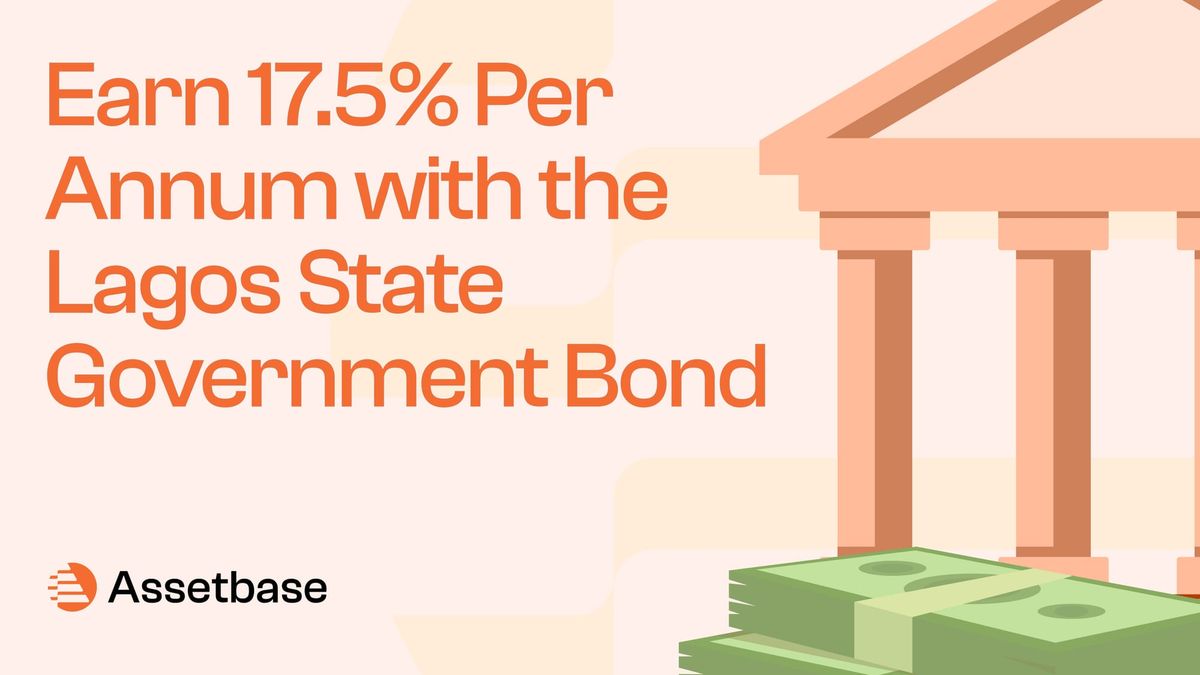
The Lagos State Government Series 5 Bond offers investors a 17.5% fixed annual coupon while helping finance transport, healthcare and road infrastructure across the state.
Lagos makes the need for infrastructure impossible to ignore. Every day, millions of people move through its roads, businesses operate across its commercial districts, goods pass through its ports, and new communities emerge at its edges. Keeping an economy of this scale moving requires continuous investment in the infrastructure that supports it.
For the Lagos State Government, that means finding ways to finance projects that can take years to complete and will serve residents long after the money has been spent. One way the state raises this capital is through the bond market, where investors lend money to the government in exchange for agreed interest payments and repayment of their principal under the bond's terms.
The latest offering is the Lagos State Government Series 5 Bond, a 10-year fixed-rate bond under the state's ₦1 trillion Debt and Hybrid Instruments Issuance Programme. Available on AssetBase, the bond offers a 17.5% annual coupon, paid semi-annually, with principal repayments scheduled to begin after a 36-month moratorium.
Investors can earn fixed income from a state with one of Nigeria's largest economies. For Lagos, the funds will help finance infrastructure projects intended to support its continued growth.
The Economy Behind the Bond
Lagos occupies a distinctive position in Nigeria's economy. It is home to major financial institutions, large corporates, manufacturing businesses, international trade and a substantial share of the country's logistics activity. The Apapa and Tin Can Island ports, the Lekki Deep Sea Port and the Lekki Free Trade Zone reinforce its importance as a centre for commerce.
In 2025, Lagos State's nominal GDP reached ₦62.5 trillion, growing by 12.2% over the previous year. Services accounted for approximately 84% of economic activity, reflecting the importance of trade, finance, transport and other service industries to the state.
The size of the economy matters, but its ability to generate public revenue matters just as much to bondholders.
Lagos reported total revenue of ₦2.68 trillion in 2025, up from ₦2.32 trillion in 2024. Tax revenue increased by 36.2% to ₦1.41 trillion, supported by higher Pay-As-You-Earn collections and tax administration reforms. Internally generated revenue accounted for approximately 69% of total revenue, reducing the state's reliance on transfers from the Federal Government.
This revenue base is important because governments need dependable income to fund public services, maintain infrastructure and meet their debt obligations. A large economy does not automatically guarantee repayment, but the capacity to collect revenue and generate cash provides an important part of the financial foundation behind a government bond.
What the Financials Tell Us
Lagos State's recent financial results show a substantial improvement in its overall position. Total revenue increased from ₦1.22 trillion in 2023 to ₦2.68 trillion in 2025. Over the same period, the state moved from a ₦460.6 billion deficit in 2023 to a ₦1.02 trillion surplus in 2025, after accounting for capital items, foreign-exchange movements and debt charges.
Operating cash flow reached ₦1.39 trillion in 2025, compared with ₦1.29 trillion in 2024. Public debt charges rose to ₦187.8 billion, but remained covered approximately 8.8 times by the state's operating surplus. Debt service represented around 18% of revenue, below the statutory ceiling of 40%.
The balance sheet also expanded. Total assets grew to ₦6.17 trillion in 2025, while total liabilities reached ₦3.16 trillion. Borrowings stood at ₦3.07 trillion, compared with ₦2.80 trillion in 2024.
Taken together, these figures point to a government with a large revenue base and substantial operating cash generation. They also show why investors should look beyond revenue growth alone. Borrowings have increased, infrastructure needs remain considerable, and the cost of running the state continues to rise.
Operating expenses grew by 29.8% in 2025, almost twice the rate of total revenue growth. That is worth monitoring because sustained growth in expenditure can put pressure on the resources available for infrastructure and debt servicing.
Where the Bond Proceeds Will Go
The Series 5 Bond has a defined infrastructure purpose. The state plans to allocate the proceeds across transport, healthcare and road development, connecting the money raised to projects intended to address some of Lagos's practical needs.
The largest allocation, approximately ₦122.2 billion, or 61% of the offer, is earmarked for the Lagos Rail Blue Line extension from Mile 2 to Trade Fair. Extending the rail network is intended to improve public transport connectivity and support movement across a rapidly growing urban area.
Approximately ₦48.9 billion, or 24%, is allocated to healthcare infrastructure, including the New Massey Street Children's Hospital and a 280-bed General Hospital in Ojo. A further ₦24.4 billion, or 12%, is earmarked for the Omu Creek road and bridge project in Ibeju-Lekki.
These allocations give the bond a tangible connection to the state's development priorities. They also illustrate why long-term financing matters: large infrastructure projects require significant upfront capital, while the benefits are delivered over many years.
Investors should remember that the bond finances the government's obligations rather than giving them ownership of the rail line, hospitals or bridge. Their investment return comes from the bond's payment terms and the issuer's ability to meet them.
How the Lagos State Government Bond Works
The Series 5 Bond is a 10-year fixed-income instrument with a stated coupon of 17.5% per annum. Coupon payments are made every six months, providing two scheduled interest payments each year.
For example, a ₦1 million investment would correspond to ₦175,000 in annual gross coupon interest at the stated rate, or ₦87,500 per half-year, assuming the full principal remains outstanding for that period. Actual payments will depend on the principal outstanding and the bond's terms, particularly once amortised principal repayments begin. The stated coupon is before applicable taxes and AssetBase's processing fee.
Principal repayment follows a different schedule from coupon payments. The bond has a 36-month moratorium on principal repayment, after which it repays principal in instalments from Year 4 through to maturity in 2036. As principal is repaid, the outstanding amount on which coupon interest is calculated declines.
The bond is issued under Lagos State's ₦1 trillion Debt and Hybrid Instruments Issuance Programme, with Series 5 offering up to ₦200 billion. Chapel Hill Denham Advisory Limited is the lead issuing house and bookrunner, while FirstCap Limited serves as joint issuing house.
Credit Ratings and the Repayment Structure
Agusto & Co. rates the Lagos State Government Aa- / A1+, and GCR rates it AA(NG) / A1+(NG). The Series 5 Bond carries indicative issue ratings of Aa from Agusto & Co. and AA(NG) from GCR, both with Stable outlooks.
These ratings reflect factors including the size and diversity of the state's economy, its capacity to generate internally generated revenue, and its operating cash flow. They assess credit quality, however, rather than guarantee that payments will always be made on time or that investors cannot lose money.
The proposed repayment structure includes a sinking fund held by independent trustees, led by STL Trustees Limited. The fund is designed to receive monthly transfers from the state's Consolidated Debt Service Account, funded by internally generated revenue, along with a proposed ₦1.8 billion monthly transfer from statutory allocation under an Irrevocable Standing Payment Order.
An important qualification remains: the Federal Ministry of Finance's approval of the ISPO is pending, according to the supplied offer information. Investors should review the final offer documents to understand the status of this approval and the precise debt-servicing arrangements.
What Investors Should Consider
A fixed coupon can make future income easier to plan for, but it does not remove the risks associated with a 10-year investment.
Lagos State has significant foreign-currency debt, exposing its finances to exchange-rate movements. Its debt stock has also risen, while operating expenses are growing faster than revenue. These factors deserve attention alongside the state's strong revenue generation and cash flow.
The investment horizon matters, too. Money committed to a 10-year bond may be unavailable for other needs, and selling a bond before maturity can result in a price gain or loss, depending on market conditions and available liquidity. Investors should also consider how inflation may affect the purchasing power of the income they receive over time.
Finally, the stated 17.5% coupon is a gross rate. The coupon is subject to 10% withholding tax and AssetBase's 2% processing fee on the interest component, as specified in the listing. Investors should review the full pricing supplement, prospectus, and platform terms before deciding.
Why Consider the Lagos State Government Series 5 Bond?
The bond may appeal to investors seeking fixed-rate naira income from a public-sector issuer with a substantial economy and established revenue base. Its semi-annual coupon payments provide a regular income stream, while the amortisation structure returns the principal gradually after the initial moratorium.
It also offers exposure to a clearly identified public infrastructure spending programme, including rail transport, healthcare, and road development. The state's credit ratings and reported operating cash flow provide additional information for assessing the issuer's financial position.
These features should be weighed against the bond's long tenor, the state's rising debt stock, foreign-exchange exposure and the outstanding ISPO approval noted in the offer information. As with any investment, suitability depends on an investor's financial goals, liquidity needs, risk tolerance and wider portfolio.
Key Investment Details
Asset: Lagos State Government Series 5 Bond
Issuer: Lagos State Government of Nigeria
Asset class: Debt (Bond)
Coupon: 17.5% per annum, fixed
Tenor: 10 years
Coupon payments: Semi-annually
Principal repayment: Amortised from Year 4, following a 36-month moratorium
Maturity: 2036
Minimum subscription on AssetBase: ₦100,000
Series 5 offer size: Up to ₦200 billion
Programme size: Up to ₦1 trillion
Issuer ratings: Aa- / A1+ from Agusto & Co.; AA(NG) / A1+(NG) from GCR
Offer opening date stated by AssetBase: 27 October 2026
Financing the Next Chapter of Lagos
Lagos will need substantial investment to support its expanding population, businesses and transport networks. The government's ability to finance that growth will depend partly on how effectively it collects revenue, manages expenditure and raises capital for long-term projects.
The Series 5 Bond lets investors lend to the Lagos State Government under defined payment terms, while the state directs the proceeds to priority infrastructure. Its fixed coupon and semi-annual payment schedule may suit investors seeking long-term naira income, provided they understand the repayment structure and associated risks.
For those considering the opportunity, the next step is to review the final offer documents, assess the terms against their investment objectives and make an informed decision.
Explore the Lagos State Government Series 5 Bond on AssetBase.